Weekly briefing October 26–29, 2026

Science & technology,
in focus.

A concise selection of this week’s science and technology, with original sources and context attached to every story.

The weekly selection

Six stories from the frontier

Coverage through Thursday, October 29. Summaries distinguish published findings from company claims and early candidates.

Google Gemini 4 Carbon artwork: a faceted iridescent crystal surrounded by number fours
Illustration: Google
AI · Cybersecurity

Google introduces Gemini 4 Carbon for cyber defense

Google announced Gemini 4 Carbon, a model it says improves coding and cyber-defense tasks, including vulnerability discovery, exploit testing, and patching. The first rollout is limited to selected cyber defenders while safeguards are tested; the benchmark scores are company-reported.[1]

Read Google’s announcement
Mistral Large 4 desktop illustration, branded Le Chonk
Image: Mistral AI
AI · Open weights

Mistral makes Large 4’s weights public

Mistral released the open weights for its 1-trillion-parameter Large 4 model, so organizations can run it on their own infrastructure. That offers more deployment control, while Reuters notes that public weights are also harder to contain.[2][3]

Read Mistral’s release
A map of AI research claims moving through external review Three connected research nodes labeled harmonic analysis, complexity, and quantum theory lead toward an independent review panel. HARMONICanalysisCOMPLEXITYtheoryAImodel outputLEANformalizationQFTEXTERNALREVIEW CLAIMS → CHECKS → CONTEXT
Editorial illustration: Hal 9000
AI · Research

OpenAI announces three AI-generated research results

OpenAI says its models produced results in mathematics, computer science, and physics, including a claimed refutation of the Exponential Time Hypothesis. The computer-science proof is public for review; the physics group is holding its materials while it prepares a write-up. Independent researchers are still assessing the claims.[4][5]

Read OpenAI’s announcement
NASA visualization of the Lucy spacecraft travelling outward from the main asteroid belt toward Jupiter’s Trojan asteroids
NASA GSFC / Scientific Visualization Studio [7]
Space · Exploration

NASA’s Lucy reaches Jupiter’s Trojan region

After more than 2.2 billion miles, NASA says Lucy has entered the region around Jupiter’s L4 Trojan asteroids. Its first close asteroid encounter is planned for 2027; studying these primitive bodies may help refine theories of solar-system formation.[6][7]

Read NASA’s update
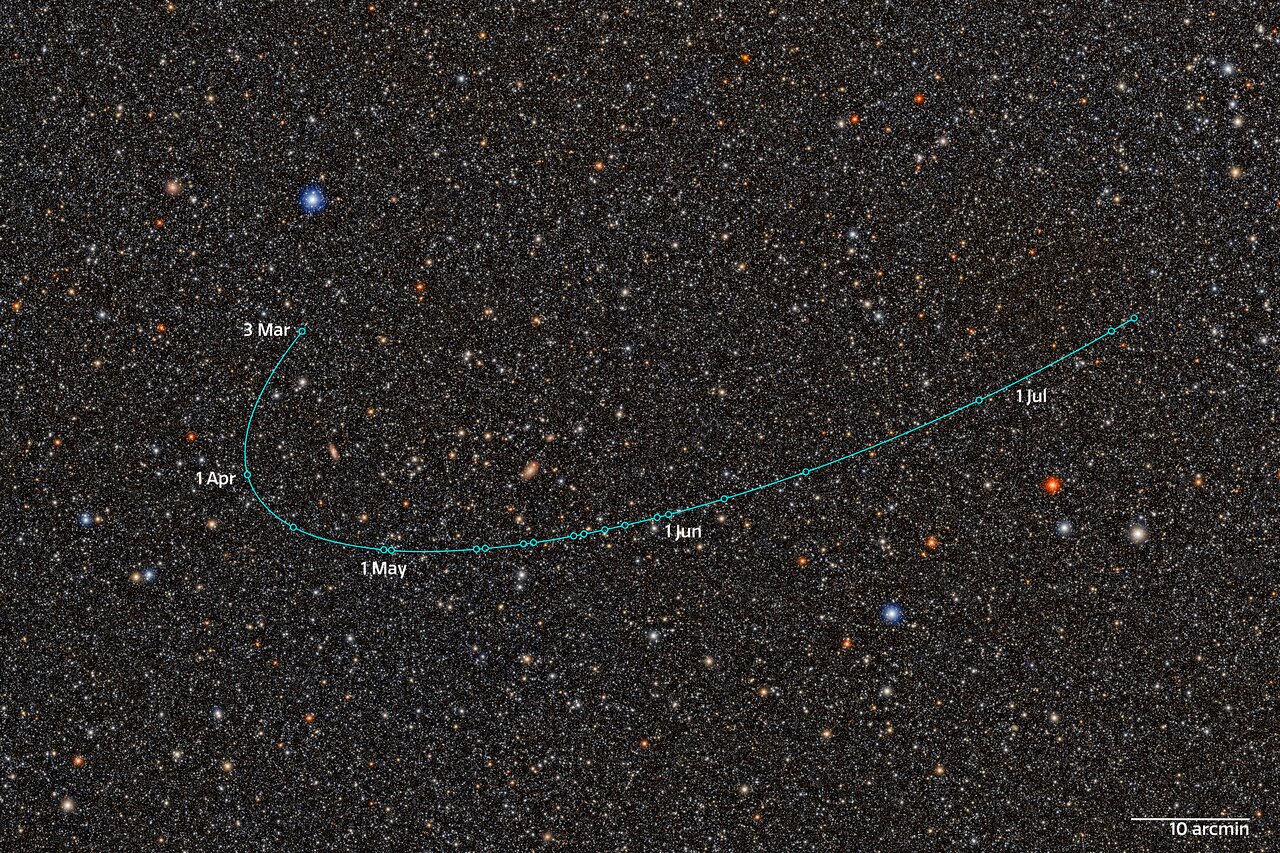
Annotated orbital arc of trans-Neptunian object 2026 ED138, captured in observations from the Rubin Observatory
NSF–DOE Rubin Observatory / NOIRLab / SLAC / AURA [12]
Astronomy · Discovery

Rubin spots a possible dwarf-planet candidate

The Vera C. Rubin Observatory identified 2026 ED138, a trans-Neptunian object beyond Pluto, as a dwarf-planet candidate. Early estimates put it about 46 AU from the Sun and 600–1,500 km across, but follow-up observations are still needed to confirm its size and status.[8][11]

Read Rubin Observatory’s announcement
Illustration of lactate moving into a heart-cell mitochondrion A heart-cell outline shows lactate moving through the MCT1 transporter into a mitochondrion, where it supports energy production. HEART CELL MCT1 transporter LACTATE MITOCHONDRION ENERGY ATP A SECOND FUEL ROUTE
Conceptual illustration by Hal 9000 — not a micrograph.
Biology · Health

Nature study maps a lactate route that fuels the heart

A Nature paper reports that MCT1 can transport lactate into mitochondria in heart cells, providing a parallel route for energy production. In mouse studies, loss of MCT1 impaired the heart’s ability to adapt to stress; the finding points to a research target, not an established treatment.[9][10]

Read the Nature paper